July is an interesting time for businesses in Austin, Texas. The first half of the year has already revealed what is working and what is slowing growth. Budgets are being reviewed, teams are feeling the pressure of increasing workloads, and business owners begin asking an important question:
“Are we growing because we’re working harder, or because our systems are getting smarter?”
For many companies, the answer is uncomfortable.
Employees are spending hours copying information between software, manually responding to inquiries, updating spreadsheets, chasing invoices, scheduling appointments, and performing countless repetitive tasks that create little real value.
Most business owners immediately think they need automation software.
In reality, they usually need something much more important first:
A professionally developed website designed to function as the operational hub of the business, not simply an online brochure.
This is where many Austin businesses miss one of the biggest opportunities available today.
Automation Doesn’t Start With AI
The word “automation” often brings images of AI chatbots, robotic workflows, and futuristic software.
But successful automation begins much earlier.
It starts with organized business processes.
A professional website developer doesn’t simply design pages. They build digital infrastructure that allows information to move automatically between customers, employees, and business systems.
Think about the journey of a customer.
A visitor lands on your website.
They request a quote.
They schedule a consultation.
They receive confirmation.
Their information enters your CRM.
Your sales team is notified.
A proposal is generated.
An invoice is created.
A follow-up email is scheduled.
None of those actions should require someone copying and pasting information.
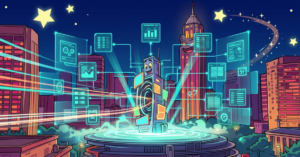
Modern websites can become the central command center that coordinates these workflows automatically. Companies specializing in both web development and automation increasingly build websites as connected business systems rather than standalone marketing assets.
The Hidden Cost of Manual Operations
Five minutes updating a spreadsheet.
Three minutes sending appointment reminders.
Ten minutes recreating customer information.
Two minutes forwarding emails.
Individually they seem insignificant.
Collectively they consume hundreds of hours every year.
More importantly, manual work introduces human error.
A mistyped email address.
A forgotten follow-up.
An incorrect invoice.
An outdated customer record.
Every mistake creates friction that customers notice.
Automation is not about replacing employees.
It is about allowing talented people to spend more time solving problems, building relationships, and generating revenue.
Why Websites Have Become Business Platforms
Ten years ago, websites mainly answered questions.
Today, customers expect them to perform tasks.
Book appointments.
Collect payments.
Provide estimates.
Track orders.
Upload documents.
Answer questions.
Manage memberships.
Integrate with customer portals.
Businesses that still treat their websites as digital brochures often force customers to leave the site and complete manual steps elsewhere.
Every additional step increases abandonment.
Professional developers build websites that eliminate unnecessary friction by connecting directly with CRMs, payment processors, scheduling platforms, accounting systems, and cloud applications.
Austin Businesses Face Unique Growth Challenges
Austin has become one of the fastest-growing business communities in the United States.
That creates opportunity, but also competition.
Customers compare experiences across industries.
If one company allows online scheduling, instant confirmations, and automated communication while another requires phone calls and paperwork, expectations quickly shift.
The businesses winning today are often not the ones with the largest teams.
They’re the ones with the smartest systems.
Automation helps smaller businesses compete with much larger organizations by removing operational bottlenecks.
What Should Actually Be Automated?
Not every process deserves automation.
Professional developers begin by identifying repetitive, predictable workflows.
Common examples include:
- Lead capture and CRM entry
- Appointment scheduling
- Contact form routing
- Email sequences
- Invoice generation
- Payment reminders
- Customer onboarding
- Document collection
- Internal notifications
- Reporting dashboards
- Review requests
- Team task creation
The goal isn’t maximum automation.
It’s meaningful automation.
Every workflow should save measurable time or improve customer experience.
Integration Is Where Most Projects Succeed or Fail
Many businesses purchase excellent software but never connect it properly.
Their CRM doesn’t communicate with accounting.
Scheduling software doesn’t update customer records.
Marketing platforms operate independently.
Employees become the bridge between disconnected systems.
Professional website developers understand APIs, integrations, and workflow architecture.
Instead of adding another application, they create an ecosystem where existing software works together automatically. Businesses implementing integrated automation consistently focus on connecting existing tools before adding new ones.
Customer Experience Is an Automation Strategy
Automation isn’t only about internal efficiency.
Customers benefit directly.
Imagine requesting a quote.
Within seconds you receive confirmation.
Your consultation is scheduled.
Calendar invitations arrive automatically.
Reminder emails reduce no-shows.
Documents are prepared before your appointment.
After service, invoices arrive instantly.
Follow-up surveys are sent automatically.
Every interaction feels organized.
Customers rarely think, “Their automation is impressive.”
Instead, they think:
“These people are incredibly professional.”
That’s the real competitive advantage.
Prepare Your Systems Before You Scale
Many companies wait until they’re overwhelmed before investing in automation.
Unfortunately, that’s also when implementation becomes more complicated.
Businesses preparing for growth build systems that can handle increasing demand before it arrives.
Whether your website receives fifty visitors or fifty thousand, your workflows should continue operating consistently.
Security Cannot Be an Afterthought
Automation handles customer information.
Names.
Addresses.
Payment details.
Business documents.
Poorly implemented automation creates unnecessary risk.
Professional developers understand secure hosting, encrypted communication, software updates, backups, access controls, and ongoing maintenance.
Automation without security simply creates faster ways to create bigger problems.
Measuring Automation ROI
The value of automation extends beyond payroll savings.
Consider measuring:
- Faster response times
- Higher conversion rates
- Reduced customer abandonment
- Fewer administrative errors
- Increased employee productivity
- Better customer satisfaction
- Shorter sales cycles
- Improved reporting accuracy
Many businesses discover their biggest return isn’t eliminating jobs.
It’s creating capacity.
The same team accomplishes significantly more work without sacrificing quality.
Why DIY Automation Often Reaches a Ceiling
Modern no-code tools have made automation more accessible.
That’s a positive development.
However, businesses frequently reach limitations.
Complex workflows.
Custom integrations.
Performance optimization.
Security.
Database architecture.
Website speed.
SEO.
Accessibility.
API development.
These areas require professional expertise.
A website developer focused on automation understands how each component affects the others, creating systems that remain reliable as the business evolves.
The Competitive Advantage Isn’t Automation, It’s Integration
Many Austin businesses already own excellent software.
The real challenge is making those tools work together.
When your website becomes the center of your operations instead of a disconnected marketing asset, every department benefits.
Marketing generates qualified leads.
Sales receives organized information.
Operations begin work faster.
Accounting receives cleaner data.
Leadership gains better reporting.
Customers enjoy smoother experiences.
Automation becomes nearly invisible, and that’s exactly how it should be.
The Future of Business Automation
Business automation is no longer reserved for enterprise organizations with massive technology budgets.
For Austin businesses, it has become one of the most practical investments available.
But automation should never begin with software shopping.
It should begin with understanding your business processes and building a professional website capable of supporting them.
The strongest websites no longer exist simply to attract visitors.
They qualify leads.
Coordinate operations.
Reduce repetitive work.
Connect business systems.
Support employees.
Delight customers.
And most importantly, they continue creating value long after they’re launched.
At Tacctful, we believe a website should be far more than an online presence. It should become one of your hardest-working business assets, connecting your tools, simplifying operations, and creating automation that saves time every single day. Whether you’re modernizing an existing business or preparing for your next stage of growth, investing in professional website development today creates the foundation for a more efficient, scalable business tomorrow.